Used Mask Filtration: Can You Wash and Reuse PM2.5 Masks?
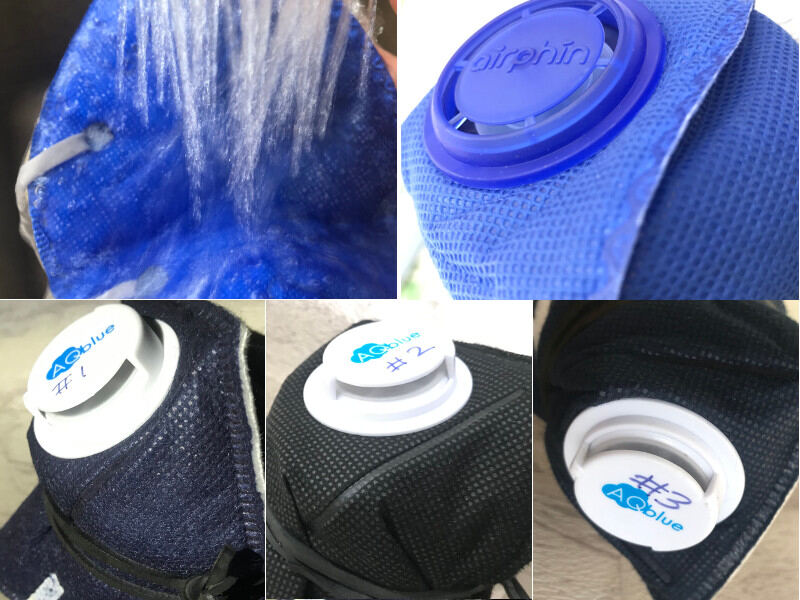
Follow-up to the face mask filtration study. Used masks retain 74% removal efficiency; washed masks achieve 82%. Both are acceptable alternatives to disposal after single use.
Abstract
In the previous study, new particulate respirator masks (AQBlue, Airphin) achieved ~90% PM2.5 removal efficiency (RE). However, at 35-50k VND per mask (US$1.50-2.20), weekly replacement is expensive for low-to-medium income commuters.
This study tested whether used and washed masks retain acceptable filtration:
| Condition | PM2.5 Removal Efficiency |
|---|---|
| New | ~90% |
| Used (2-3 weeks daily commute) | 74% +/- 10% |
| Washed (tap water, air dried) | 82% +/- 12% |
Washing and reusing dedicated PM2.5 masks 1-2 times is a viable cost-saving strategy with only moderate loss in filtration.
Background
Fabric masks dominate in Vietnam due to low cost and washability — many users have been washing and reusing the same fabric mask for 2+ years. When dedicated PM2.5 masks (like AQBlue) are available, the habit of washing and reusing carries over naturally.
A 2005 study in Vietnam found that hospital staff preferred reusable masks due to institutional budget constraints. If brand-name PM2.5 masks can survive one wash with reasonable RE, the effective cost per use drops by half.
Method
- Setup: Identical to the original mask study — two PMS7003 sensors (background and filtered), mask mounted on PVC pipe with variable-speed fan
- Masks tested: 3 AQBlue masks, 1 Airphin mask
- Conditions: New, used (2-3 weeks daily commute), washed (tap water, hang-dried)
- Fan duty: Automated cycling through 25%, 50%, 75%, 100% using a NodeMCU microcontroller, 3 hours per level
- Duration: ~2 days per test
Results
Overall Removal Efficiency
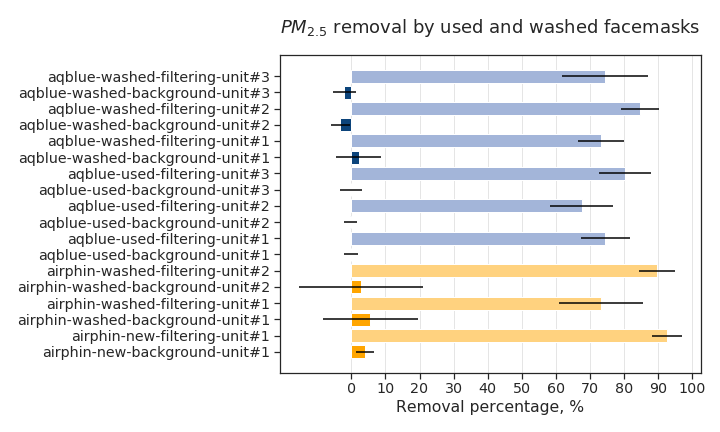 Fig. 1: Average PM2.5 removal efficiency. Cross-check periods (both sensors measuring same air) confirm near-zero RE baseline. Error bars = 2 standard deviations.
Key findings:
- Used masks: 74 +/- 10% RE
- Washed masks: 82 +/- 12% RE
- Both are 10-20% lower than new masks (~90%)
Effect of Fan Speed (Airflow) on RE
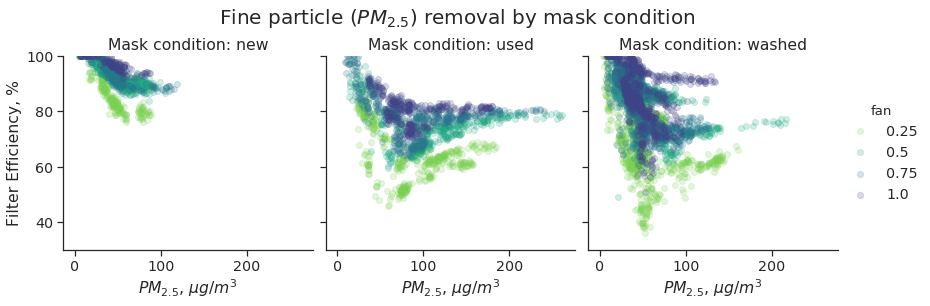 Fig. 2: RE vs fan duty by condition (new, used, washed). Higher flow slightly improves RE within each condition.
RE vs PM2.5 Concentration
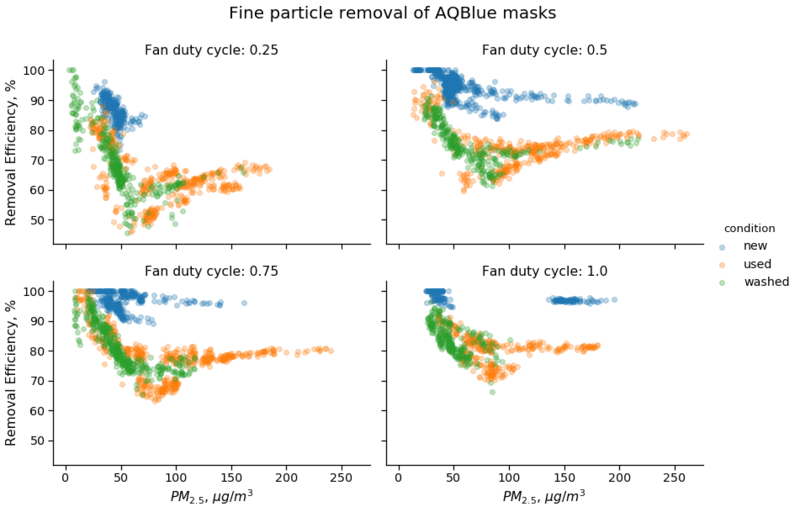 Fig. 3: New masks consistently outperform used and washed across the PM2.5 range (0-200 ug/m3).
Brand Comparison (Used Condition)
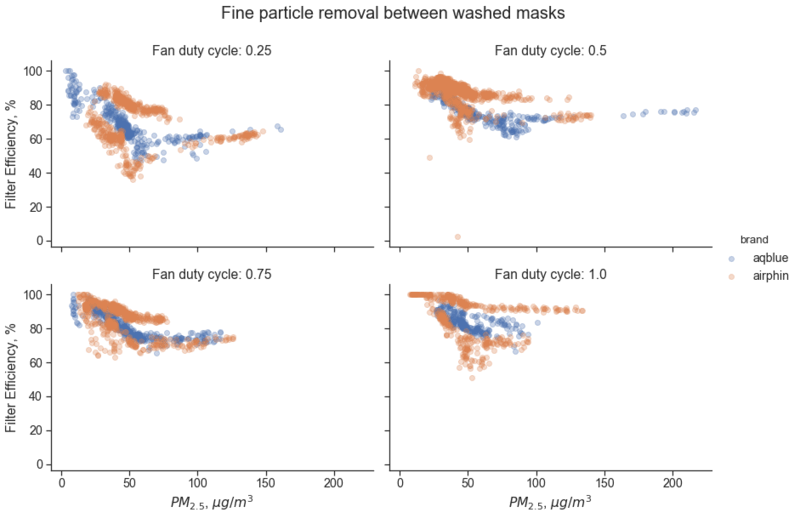 Fig. 4: AQBlue showed wider RE range; Airphin was more consistent. Overlapping performance with limited sample size (3 AQBlue, 2 Airphin).
Limitations
- Small sample size (4 masks total)
- Only 1 wash cycle tested — multiple washes likely degrade RE further
- Fan-driven airflow does not replicate human breathing rhythm (~12 breaths/min, 0.5L each)
- No sanitization assessment — washing removes PM but may not eliminate biological contamination
- These masks are not designed for reuse; the manufacturer recommends single use
Conclusions
- Used masks (2-3 weeks) retain ~74% PM2.5 removal efficiency — acceptable for continued use
- One wash recovers some performance to ~82%, possibly by removing accumulated particles from the filter layers
- Recommendation: Dedicated PM2.5 masks can be used for 2-3 weeks and washed once before disposal, reducing cost by roughly half
- For commuters who cannot afford frequent replacement, reuse with a single wash is a practical compromise between cost and protection
Originally published on b-io.info, 2019. Follow-up study to the face mask filtration evaluation.